
Barley porridge is a warm, whole-grain breakfast made by cooking barley flour, cracked barley or pearl barley in milk or water. Its main benefits are simple ones: it gives you carbohydrate for energy, dietary fibre including a soluble fibre called beta-glucan, some plant protein and minerals from the grain. Fibre-rich grain dishes tend to be filling, which is why many people find barley porridge keeps them going through the morning.
What you add matters as much as the barley. Milk, nuts, dates and honey change the calories and sugar a lot, so the bowl you make decides how "healthy" it is.
What is barley porridge?
Barley porridge is any soft dish of barley cooked in liquid. In India it is known as jau ka dalia when made from cracked barley, and as Talbina (Talbeena) when made from finely ground barley. Talbina is smooth and quick to cook; cracked-barley porridge is coarser and takes longer. We sell ready-to-cook barley porridge mix in eight blends.
Barley (jau) is one of the oldest cultivated grains and has long been eaten in north India, especially in summer drinks such as sattu and in rotis.
Barley porridge benefits: what a bowl gives you
- Whole grain: whole barley keeps its bran and germ, so you get the grain's natural fibre, B vitamins and minerals such as magnesium, phosphorus and iron.
- Soluble fibre (beta-glucan): barley is one of the few common grains with a good amount of beta-glucan. It is what makes barley porridge thick and creamy.
- Insoluble fibre: from the bran, adding bulk to your diet.
- Plant protein: barley has some protein; cooking it in milk adds more, along with calcium.
- Carbohydrate for energy: like any grain, barley is mostly carbohydrate.
Pearl barley has had some of its bran polished off, so it has less fibre than whole or hulled barley. Barley flour can be either, so check the pack.
Is barley porridge healthy?
A plain bowl of whole barley porridge in a sensible portion is a good everyday breakfast for most adults. It is a whole-grain food with fibre, which most Indian diets are short of.
It stops being a light breakfast when it turns into a dessert: full-cream milk, lots of sugar or honey, ghee and a big handful of dry fruit. That can still be a fine meal for a child, an active teenager or someone who needs extra calories, but not for someone trying to eat lighter.
Two cautions. Barley contains gluten, so it is not suitable for anyone with coeliac disease. And if you have diabetes, barley porridge is still a carbohydrate food; speak to your doctor about portion and sweeteners.
Barley porridge for breakfast: simple ways to make it
Quick barley flour porridge (Talbina style), 10 minutes
- Dry-roast 2 tablespoons of barley flour on a low flame for 2 to 3 minutes until it smells nutty.
- Whisk in 1 cup of milk, or half milk and half water, so no lumps form.
- Simmer, stirring, for 5 to 7 minutes until thick and smooth.
- Add a chopped date or a small spoon of honey, and a pinch of cardamom.
Cracked barley porridge, 25 minutes
Rinse ¼ cup of cracked barley (jau dalia) and soak for 30 minutes. Cook in 1½ cups of water, or two whistles in a pressure cooker, then add milk and simmer until creamy. For a savoury version, cook it with vegetables and a tadka instead of milk.

If you want to start from flour, our Jau Barley Atta works for both porridge and rotis. Check its pack label for the grain blend.
Good toppings for barley porridge
| If you want | Add |
|---|---|
| A lighter bowl | Toned milk or water, cinnamon, fresh fruit |
| More protein | Extra milk, a spoon of curd, a few almonds |
| More calories | Full-cream milk, dates, walnuts, a spoon of peanut butter |
| Natural sweetness | One or two chopped dates, or a teaspoon of honey |
| A savoury meal | Vegetables, moong dal, cumin and ginger tadka |
Barley porridge vs oats and wheat porridge
All three are whole-grain porridges, and all can fit a balanced diet. Barley and oats both contain beta-glucan, which gives them a creamy texture. Wheat dalia is chewier and works especially well in savoury dishes. Oats are naturally gluten-free but are often processed alongside wheat, while barley and wheat both contain gluten.
For a fuller comparison, including how full each keeps you, read our guide to barley porridge vs oats vs muesli.
Is barley porridge good for weight loss or weight gain?
Barley porridge is not a weight-loss or weight-gain food by itself. Body weight depends on your total intake and activity over time. A small, plain bowl made with water or toned milk is a light meal; a large bowl with full-cream milk, nuts, dates and honey is calorie-dense. Choose the version that matches your goal, and if you are managing weight for medical reasons, ask your doctor or a dietitian.
Ready-made barley porridge
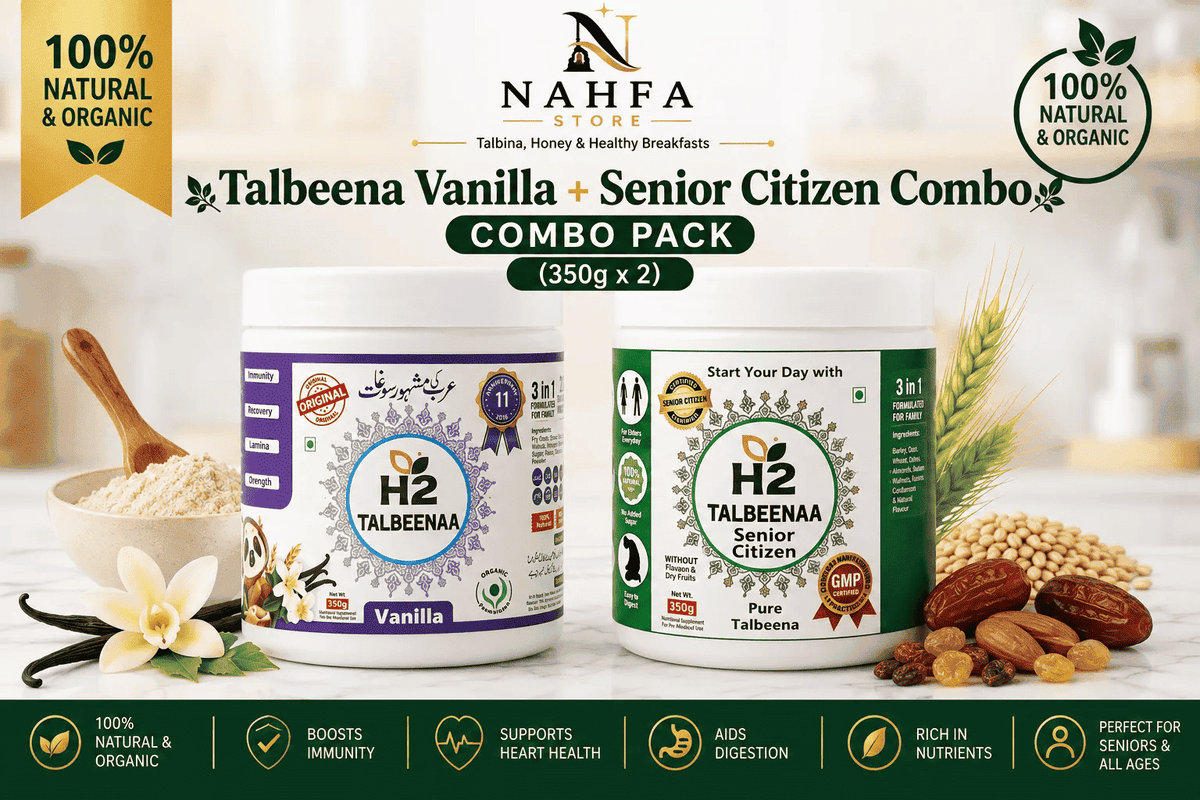
If you prefer not to roast flour every morning, a ready barley porridge mix takes about five minutes in hot milk. Talbeena mixes usually include barley with oats, dates and nuts, and most flavoured versions also contain sweetener. You can compare flavours and ingredients in our Talbeena (Talbina) collection.
Frequently asked questions
Is barley porridge good for breakfast?
Yes, for most people. It is a whole-grain breakfast with fibre and some protein, and it is quick to make from barley flour.
Is barley porridge the same as Talbina?
Talbina is one kind of barley porridge, made from finely ground barley so it is smooth. Barley porridge can also be made from cracked or pearl barley.
Can I eat barley porridge every day?
Many adults do, as part of a varied diet. If you are new to high-fibre grains, start with a small bowl and increase slowly.
Does barley porridge contain gluten?
Yes. Barley contains gluten, so it is not suitable for people with coeliac disease or gluten intolerance.
Which is better, barley porridge or wheat porridge?
Both are good whole-grain options. Barley gives a smoother, creamier porridge; wheat dalia is chewier and better for savoury dishes. Pick the one your family enjoys.



0 comments