

Honey Guide: Types, Benefits, Purity & How to Choose
Honey Guide: Types, Benefits, Purity & How to Choose
Honey has been part of everyday wellness routines for generations, valued as a natural sweetener and a companion to breakfast staples like Talbeenaa, oats and muesli. This guide walks through the honey varieties available at Nahfa Store, how to judge quality, and how to store honey so it stays good for longer.
Types of Honey and How They Differ
Honey's flavour and colour depend largely on the flowers bees forage from:
- Multiflora Honey – collected from a mix of wildflowers, giving it a balanced, everyday flavour that works well in tea, on toast or drizzled over breakfast bowls.
- Kashmiri Acacia Honey – a lighter honey with a delicate sweetness and slower crystallization, often preferred by those who want a milder taste.
- Litchi Honey – carries a distinctive fruity, floral note from litchi blossoms.
- Ajwain Honey – a more aromatic, robust-tasting honey.
-
Tulsi Honey and Jamun Honey – single-origin honeys named for the blossoms they're sourced from, each with its own character.
Honey and Everyday Wellness
Honey is commonly used as a natural alternative to refined sugar and has a long history in traditional wellness practices across South Asia and the Middle East. Many people add it to warm water or tea, stir it into Talbeenaa after cooking, or pair it with oats, muesli and fresh fruit at breakfast. As with any concentrated sweetener, it's best enjoyed in moderation as part of a balanced diet.
How to Judge Honey Quality
A few practical checks can help when choosing honey:
- Look for certification. FSSAI licensing and clear labelling are more reliable indicators of quality than home tests, which can be inconclusive.
- Don't rule out crystallization. Raw, unheated honey often crystallizes over time — this is a natural process, not a sign of spoilage or adulteration.
- Check the ingredient list. Pure honey should list only honey, with no added sugar syrups.
Raw vs Processed Honey
Raw honey is minimally filtered and not heated to high temperatures, which helps it retain more of its natural enzymes and pollen. Processed or heavily heated honey tends to have a smoother texture and a longer shelf life before crystallizing, but goes through more processing. Both are safe to consume — the choice mostly comes down to preference for texture and how "natural" you want the product to be.
How to Store Honey
Keep honey in a tightly sealed container, away from direct sunlight, at room temperature. Refrigeration isn't necessary and tends to speed up crystallization. If honey crystallizes, placing the jar in warm (not boiling) water can help it return to a liquid state.
Honey During Ramadan and Special Occasions
Honey is a traditional part of Suhoor and Iftar spreads for many families, often paired with dates, Talbeenaa or bread. Its natural sweetness makes it a simple way to round off a meal without reaching for refined sugar.
Frequently Asked Questions
What's the difference between raw and pasteurized honey?
Raw honey is minimally processed and unheated, while pasteurized honey is heated to improve shelf life and texture. Both are safe to eat; raw honey retains more natural enzymes and may crystallize sooner.
How can I tell if honey is pure?
The most reliable way is to check for FSSAI certification and a clean ingredient list. Home tests like the water-drop test are commonly discussed but aren't scientifically reliable on their own.
Does honey expire?
Properly stored honey has a very long shelf life and doesn't spoil the way most foods do, though its flavour and texture can change over time.
Is honey safe for children?
Honey is not recommended for babies under 12 months old, due to a small risk of infant botulism. For older children and adults, honey is a common part of the diet.
How much honey can I have in a day?
Honey is a concentrated sweetener, so it's best enjoyed in moderation as part of a balanced diet rather than in large amounts.
From Our Blog
- Honey for Kids: Age, Safety & How to Introduce It
- Honey During Pregnancy: What to Know
- Best Honey for Daily Use in India: Multiflora vs Acacia vs Litchi vs Ajwain
- How to Use Honey with Talbeena, Oats & Muesli
Explore More
Product tabs
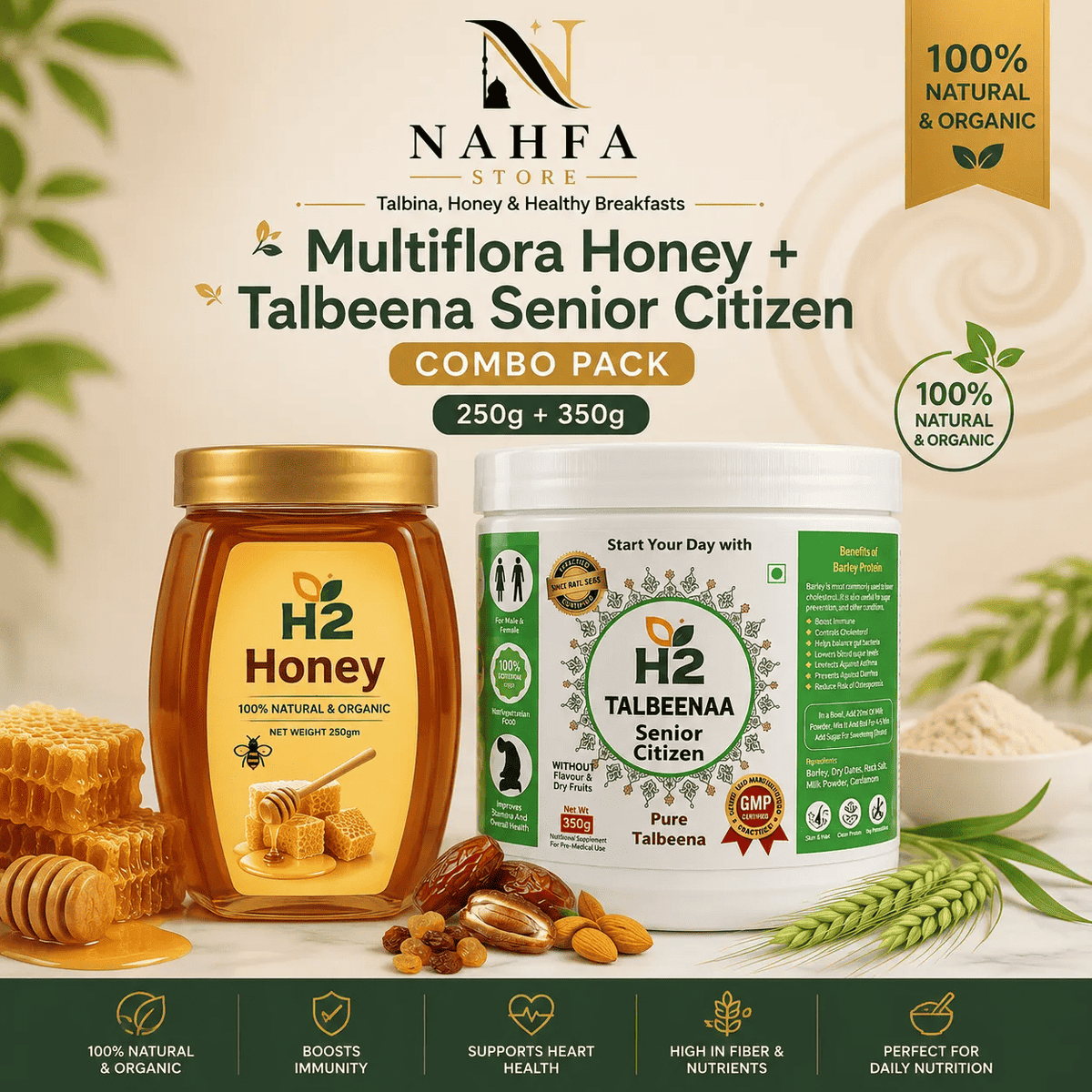
Senior Citizen Talbeena & Multiflora Honey Food Combo
HTWO Talbeena (talbina) Senior Citizen & Multiflora Honey Combo 250g + 350g • HTWO Healthcare • Senior Citizen Talbeena & Multiflora Honey Food Combo • Default Title
Choose your option


Honey and Barley Porridge Food Combo
HTWO Multiflora Honey & Milk-Flavour Talbeena Barley Porridge Combo - 250g + 350g • HTWO Healthcare • Honey and Barley Porridge Food Combo • Default Title
Choose your option

HTWO Multiflora Honey + Talbeena Women Combo (250g + 350g) • HTWO Healthcare • Combo • Default Title
Choose your option


HTWO Multiflora Honey + Talbeena Rose Combo (250g + 350g) • HTWO Healthcare • Combo • Default Title
Choose your option


HTWO Multiflora Honey + Talbeena Elaichi Combo (250g + 350g) • HTWO Healthcare • Combo • Default Title
Choose your option

HTWO Multiflora Honey + Talbeena Vanilla Combo (250g + 350g) • HTWO Healthcare • Combo • Default Title
Choose your option


HTWO Talbeena Elaichi + Baby Combo (350g x 2) • HTWO Healthcare • Combo • Default Title
Choose your option

HTWO Elaichi & Women Talbeena Barley Porridge Combo - 350g x 2 • HTWO Healthcare • Barley Porridge Food Combo • Default Title
Choose your option


Chocolate Talbina - HTWO Barley Porridge with Almonds, Dates & Honey • HTWO Healthcare • Barley Porridge Mix • 250g
Choose your option


HTWO Women Talbina - Rose Barley Porridge Mix - 250g / 350g • HTWO Healthcare • Barley Porridge Mix • 250g
Choose your option


Milk Talbina (Talbeena) Barley Porridge
HTWO Milk Talbina – Barley Porridge with Dry Fruits & Nuts • HTWO Healthcare • Milk Talbina (Talbeena) Barley Porridge • 250g
Choose your option


Baby Talbina | HTWO Baby Barley Porridge 250g & 350g • HTWO Healthcare • Talbeena • 250g
Choose your option

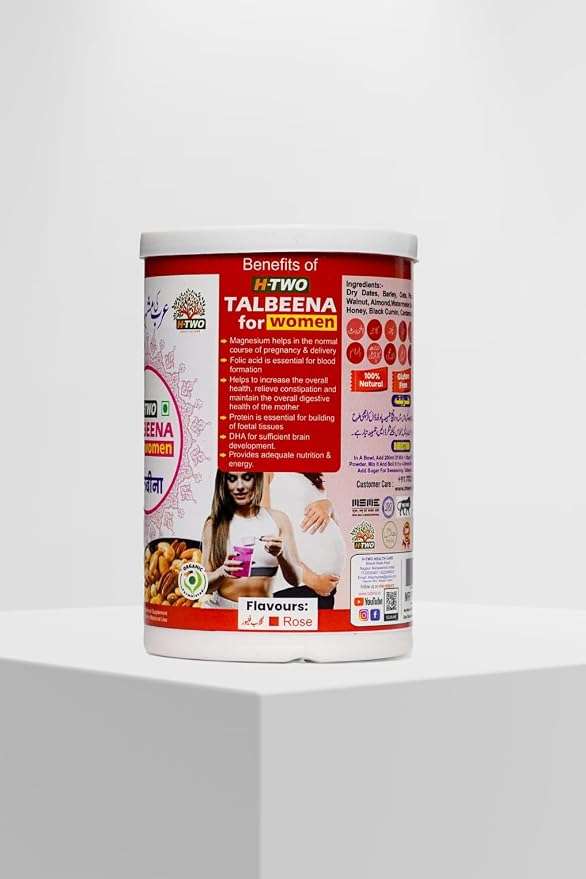
HTWO Talbeena Rose – Rose-Flavoured Barley Porridge Mix • HTWO Healthcare • Talbeena • 250g
Choose your option

Almond Elaichi Talbina | HTWO Barley Porridge 250g & 350g • HTWO Healthcare • Talbeena • 250g
Choose your option


Senior Citizen Talbina | HTWO Barley Porridge 250g & 350g • HTWO Healthcare • Talbeena • 250g
Choose your option


Vanilla Talbina | HTWO talbeena Barley Porridge – 250g, 350g & 1kg • HTWO Healthcare • Talbeena • 250g
Choose your option
Senior Citizen Talbeena & Multiflora Honey Food Combo
HTWO Talbeena (talbina) Senior Citizen & Multiflora Honey Combo 250g + 350g • HTWO Healthcare • Senior Citizen Talbeena & Multiflora Honey Food Combo • Default Title
Choose your option
Honey and Barley Porridge Food Combo
HTWO Multiflora Honey & Milk-Flavour Talbeena Barley Porridge Combo - 250g + 350g • HTWO Healthcare • Honey and Barley Porridge Food Combo • Default Title
Choose your option


Dry Fruits Honey 500g (HTWO Honey with Dry Fruits) • HTWO Healthcare • Honey • 500
Choose your option
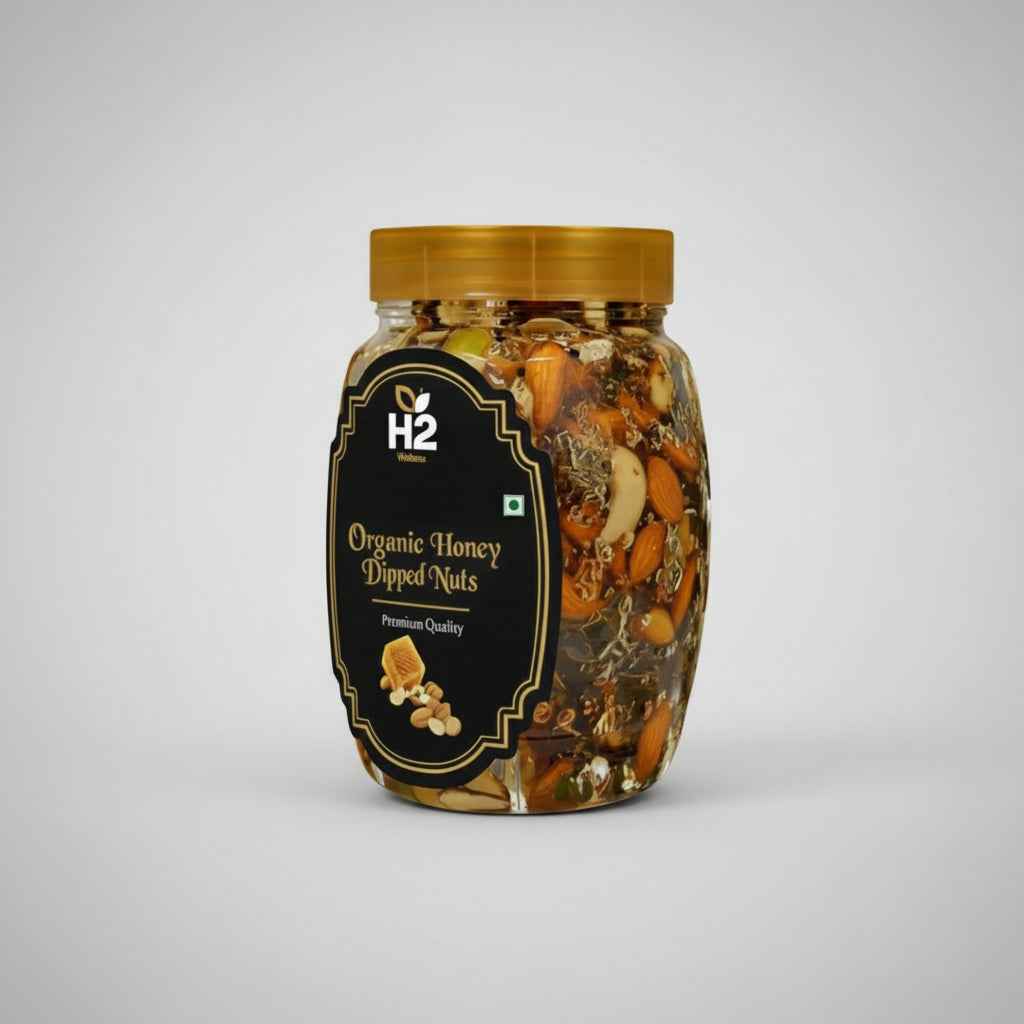

Organic Raw Honey Dipped Nuts 500g | Raw Honey Blend • HTWO Healthcare • Honey • 500
Choose your option
HTWO Multiflora Honey + Talbeena Women Combo (250g + 350g) • HTWO Healthcare • Combo • Default Title
Choose your option
HTWO Multiflora Honey + Talbeena Rose Combo (250g + 350g) • HTWO Healthcare • Combo • Default Title
Choose your option
HTWO Multiflora Honey + Talbeena Elaichi Combo (250g + 350g) • HTWO Healthcare • Combo • Default Title
Choose your option