
Most people preparing talbina ask their mothers or search a quick recipe video, then default to milk without a second thought. Milk feels richer, more nourishing, more traditional. But that instinct - while understandable - glosses over a real functional difference that affects how talbina works in your body, depending entirely on what you're trying to achieve.
The question of talbina with milk or water is not a matter of taste preference. It is a matter of metabolic outcome. And the answer shifts dramatically depending on whether your goal is weight management, blood sugar balance, post-illness recovery, or general everyday nourishment.
Why the Base Liquid in Talbina Is a Functional Choice, Not Just a Flavour Decision
Talbina is, at its core, a barley porridge. Barley contains beta-glucan, a soluble fibre that forms a viscous gel in the digestive tract. This gel is responsible for most of what talbina is traditionally praised for - its ability to slow digestion, moderate appetite, and ease discomfort.
When you prepare talbina with water, that gel forms cleanly and the fibre works with minimal interference. The calorie contribution of the base liquid is negligible. Digestion slows, but the body is not simultaneously processing a fat-and-protein load from dairy.
When you prepare talbina with milk, you introduce a significant caloric input - fat, lactose, and protein - alongside the barley. For some goals, this is genuinely beneficial. For others, it works against you. The distinction matters, and ignoring it means you may be preparing talbina "correctly" by popular convention while undercutting your own health objective.
Talbina with Water: The Better Option for These Specific Scenarios
Here is where most wellness content fails people: it presents milk-based talbina as universally superior, then attributes the outcome to personal preference if results are mixed.
Water-based talbina performs more precisely for three specific scenarios:
Weight management: The total calorie count of talbina prepared with water is substantially lower than with full-fat milk. If you're using talbina as a morning meal or a controlled snack, starting with water means the barley's satiety effect - driven by that beta-glucan gel - is doing the majority of the appetite-regulation work without added caloric load from dairy fat.
Blood sugar moderation: Milk contains lactose, which is a sugar. For individuals monitoring their blood sugar response, adding milk means introducing additional sugars alongside the barley. Water keeps the glycaemic input minimal, letting the slow-release nature of barley drive the response without dairy interference.
Digestive sensitivity: Many adults in India carry some degree of lactose intolerance without ever having formally identified it. Bloating, heaviness after breakfast, and sluggish digestion after morning porridge are often attributed to overeating rather than to the milk in the bowl. Water-based talbina sidesteps this entirely.
When Milk-Based Talbina Is the Correct Choice
This is not an argument against milk. Milk-based talbina has real, meaningful advantages - it simply applies to a different person with a different goal.
Post-illness recovery and convalescence: When the body needs rapid nutrient replenishment and protein to rebuild tissue, milk adds meaningful nutritional density. This is precisely the context in which talbina has historically been consumed in traditional medicine - warm, thin, prepared with milk, given to someone who has been ill or is physically depleted.
Children and growing adolescents: Caloric density matters here. Milk provides fat-soluble vitamins, calcium, and protein that children need in concentrated form. A water-based talbina for a growing child is a missed opportunity for nutrient delivery.
Cold weather and high physical activity: If you're active, burning significant calories daily, or living in a cold climate where energy demands are elevated, milk provides the sustained energy profile that water cannot.
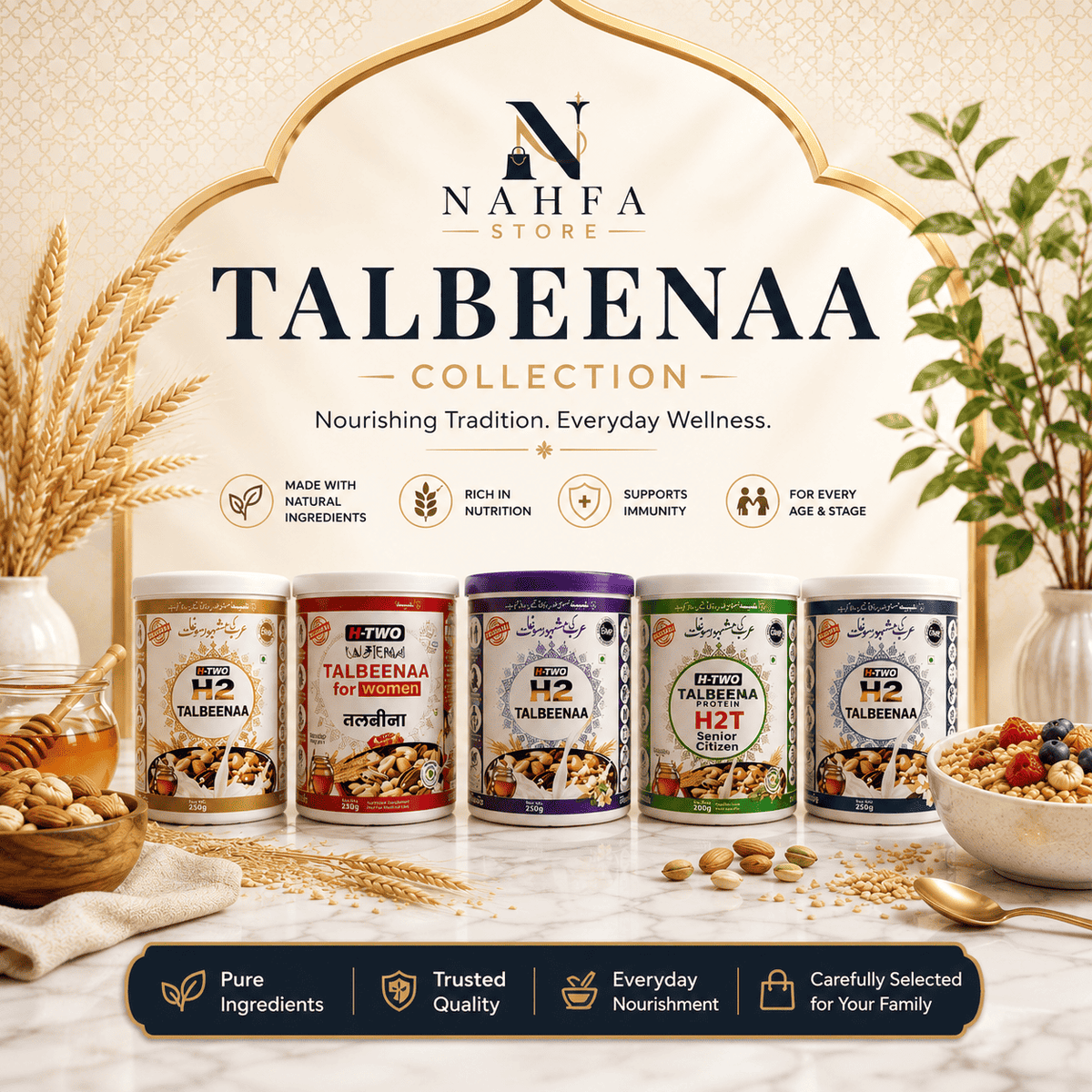
This is why the HTWO Milk Talbina – Barley Porridge with Dry Fruits & Nuts from Nahfa Store is designed with a creamy milk flavour profile and includes ingredients like oats, dry dates, almonds, cashews, walnuts, pistachios, and watermelon seeds. It's built for nourishment density - available in 250g (₹299) and 350g (₹399) packs - and specifically listed in the Kids collection for a reason. This formulation is meant for those who need replenishment, not restriction.
Similarly, the HTWO Women Talbina – Rose Barley Porridge Mix is a rose-flavoured barley-based mix made with grains, nuts, seeds, and other ingredients formulated specifically for women. Prepared with warm milk, it becomes a more complete morning meal that supports the elevated nutritional requirements many women have - particularly relevant for those who are not on a calorie-restricted protocol.
How the Preparation Format of Your Talbina Mix Changes the Equation
One thing rarely discussed in the talbina with milk or water conversation is how pre-mixed talbina products factor in. Most ready-to-prepare talbina blends already contain ingredients - dates, nuts, honey, milk powder in some cases - that contribute their own sugars, fats, and calories. This changes your starting point before you've added a single drop of liquid.
Take the Chocolate Talbina – HTWO Barley Porridge with Almonds, Dates & Honey, available at Nahfa Store in 250g (₹299) and 350g (₹399) packs. This blend includes barley, dry dates, almonds, walnuts, and honey with a rich chocolate flavour. It already has natural sugars from dates and honey baked into the formula. If your goal is blood sugar moderation, preparing this variant with water rather than milk makes practical sense - you get the depth of flavour and the barley's functional benefits without adding lactose on top of the dates and honey already present.
This is a specific, product-grounded insight that most generic talbina content ignores entirely: the composition of your talbina mix should directly inform which base liquid you choose. A mix heavy in dates and honey pairs more cleanly with water for metabolic goals. A plainer barley base can absorb the nutritional benefit of milk without crowding out your objectives.
The Practical Answer to Talbina with Milk or Water
Here is a direct framework for making the decision:
- Goal is weight management or calorie control → Prepare talbina with water
- Goal is blood sugar moderation → Prepare talbina with water, and be conscious of the fruit and honey content in your mix
- Goal is post-illness recovery or convalescence → Prepare talbina with warm milk
- Preparing for a child or growing adolescent → Milk is appropriate and nutritionally advantageous
- General everyday nourishment with no specific health target → Either works; choose based on how your stomach responds
The question of talbina with milk or water does not have one correct answer. It has a correct answer for you, based on what your body is doing right now and what you're asking talbina to help with.
What it does not have is a lazy default. Choosing milk because it tastes better is fine if nourishment density is your goal. But defaulting to milk while simultaneously trying to lose weight or manage blood sugar is working against yourself in a very quiet, very daily way.
FAQ
Q: Is talbina with water less nutritious than talbina with milk? A: Not necessarily less nutritious - it's differently nutritious. Water-based talbina delivers the full benefit of barley's fibre without additional fat or lactose. Milk-based talbina adds protein, fat, and calcium from dairy. The better option depends on your health goal, not a universal hierarchy of nutrition.
Q: Can I use plant-based milk as a middle ground for talbina? A: Yes, and for lactose-sensitive individuals this is a reasonable approach. The nutritional contribution will vary by the type of plant milk used. Unsweetened almond or oat milk adds less sugar than cow's milk, while providing a creamier texture than water. Just be aware that some plant milks contain additives - always check the label.
Q: Does the type of talbina mix I buy affect whether I should use milk or water? A: Yes, significantly. Mixes that already contain dates, honey, or milk powder have a richer base calorie and sugar profile. For these, water is often the better choice if you're managing blood sugar or calories. Plainer barley-forward mixes benefit more from milk if you're looking for fuller nutrition. Always read your product's ingredient list before deciding.
Q: How often should I eat talbina to notice a difference? A: Talbina is most effective when consumed consistently as part of a regular breakfast or light meal routine, rather than occasionally. Daily consumption over several weeks, combined with a balanced diet, is generally how traditional use recommends it. There is no fixed timeline that applies to everyone, as individual responses vary.
Start with the Right Talbina for Your Goal
The liquid you choose is only as effective as the product it carries. If you're buying a ready-to-prepare talbina blend, the quality of the barley base, the inclusion of real dates and nuts, and the absence of artificial additives all determine how well it performs - regardless of whether you use milk or water.
Nahfa Store stocks a range of HTWO Talbina variants built on authentic barley formulations, including the Chocolate Talbina, Milk Talbina, and Women's Rose Talbina, each priced between ₹299 and ₹399 for 250g and 350g packs. Browse the full Talbina collection at Nahfa Store and pick the variant that matches your actual health goal - then choose your liquid accordingly.



0 comments