
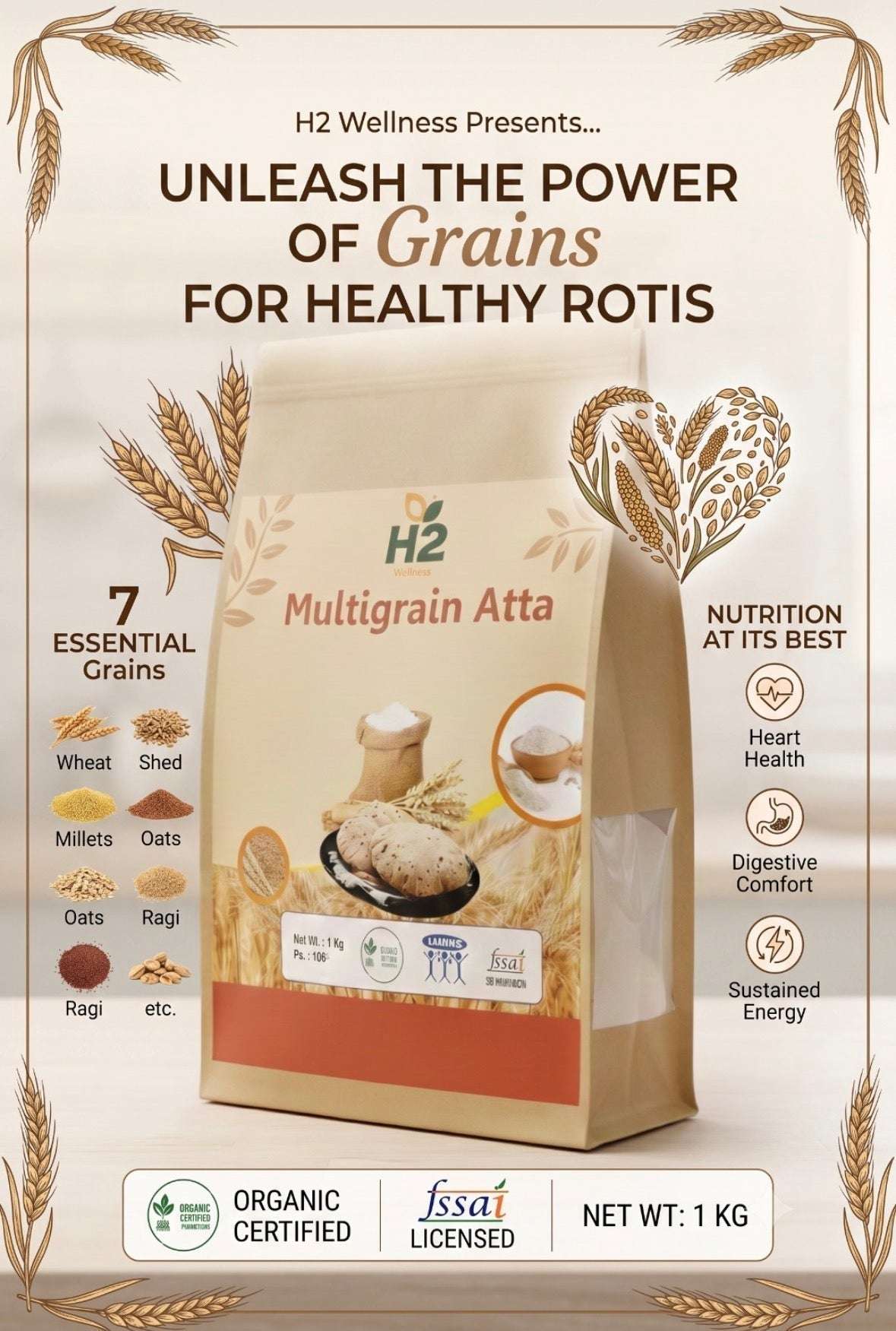
Multigrain atta is flour made from wheat blended with other grains, pulses or millets, such as barley (jau), oats, ragi, bajra, jowar, chana or soya. Its main benefits are more fibre and a wider range of nutrients than plain wheat atta, but only when those other grains make up a real share of the blend. Read the ingredient list to see how much of each grain the bag actually contains.
What are the benefits of multigrain atta?
The benefits come from the grains themselves. Each brings something different:
| Grain | What it adds |
|---|---|
| Barley (jau) | Dietary fibre, including beta-glucan, a soluble fibre |
| Oats | Fibre, including beta-glucan, and a softer texture |
| Ragi (finger millet) | Calcium and fibre |
| Bajra and jowar | Fibre, iron and a nutty flavour |
| Chana or soya | Extra protein |
| Wheat | Gluten, which keeps the dough soft and stretchy |
In practice, a good multigrain blend gives rotis with more fibre, which keeps many people full for longer, plus more variety of grains in a diet that is often wheat-heavy. It is still a staple food, so portions matter just as much as with regular atta.
Is multigrain atta better than wheat atta?
It can be, but not always. Whole wheat atta is already a whole grain with bran. A multigrain blend is only more useful if the added grains are present in meaningful amounts. If wheat makes up almost all of the bag and the other grains appear at the end of the list in tiny quantities, the roti will be close to a regular wheat roti.
How to choose multigrain atta: read the label
Under FSSAI labelling rules, ingredients must be listed in descending order of weight. That single rule tells you most of what you need to know.
- Look at the first three ingredients. These make up most of the bag.
- Check for percentages. Some brands print the share of each grain. That is the clearest sign of what you are buying.
- Compare fibre per 100g in the nutrition panel with your current atta.
- Avoid added sugar, flavours or preservatives. A flour should be just grains.
- Check the FSSAI licence number and best-before date. Multigrain flours can go stale faster than plain wheat.
Barley atta (jau ka atta)
Barley was a common grain in Indian kitchens long before refined flours. Its soluble fibre (beta-glucan) makes it different from wheat, and it is the same grain used in Talbeena (Talbina), the traditional barley porridge.
Pure barley flour has little gluten, so rotis made only with barley can crack and feel dense. That is why most barley attas mix it with wheat. HTWO Jau Barley Atta is a barley-based multigrain flour at ₹149 for 1kg, made for everyday rotis.
HTWO multigrain attas compared
| Atta | Pack and price | Blend |
|---|---|---|
| Jau Barley Atta | 1kg, ₹149 | Barley-based multigrain; full list on pack |
| Sugar Control Atta | 1kg, ₹149 | Multigrain blend; full list on pack |
| Weight Loss Atta | 1kg, ₹159 | 7-grain blend with wheat, millets, oats and ragi |
Product names describe what each blend is designed for. They are foods, not medicines or weight-loss treatments. If you are choosing an atta for diabetes, read our guide to sugar control atta vs regular atta and speak to your doctor about your diet.

All three are in our atta and flours collection.
How to make soft rotis with multigrain atta
- Use slightly more water than you would for wheat atta, added little by little.
- Knead for 5 minutes and let the dough rest, covered, for 15 to 20 minutes.
- Roll a little thicker and cook on a well-heated tawa.
- If the family is not used to the taste, mix it half and half with your usual atta for a week or two.
Who should be careful?
Most multigrain attas contain wheat and often barley, both of which contain gluten, so they do not suit people with coeliac disease or gluten intolerance. If you have diabetes, kidney disease or any condition that needs a special diet, ask your doctor or dietitian which flour and portions are right for you.
Frequently asked questions
What is the difference between multigrain atta and whole wheat atta?
Whole wheat atta is made from the whole wheat grain only. Multigrain atta blends wheat with other grains, pulses or millets. The nutritional difference depends on which grains are added and how much.
Can I use multigrain atta every day?
Yes. It can replace regular atta for rotis, parathas and theplas as part of a balanced diet.
Is barley atta good for rotis?
Yes, especially when blended with some wheat for softness. Pure barley flour makes denser rotis.
Does multigrain atta help with weight loss?
No single flour causes weight loss. Higher-fibre rotis can be more filling, but weight depends on your overall diet, portions and activity.
How long does multigrain atta last?
Follow the best-before date on the pack. Store it airtight in a cool, dry place, as flours with more bran and oil-rich grains can go stale sooner.




0 comments