
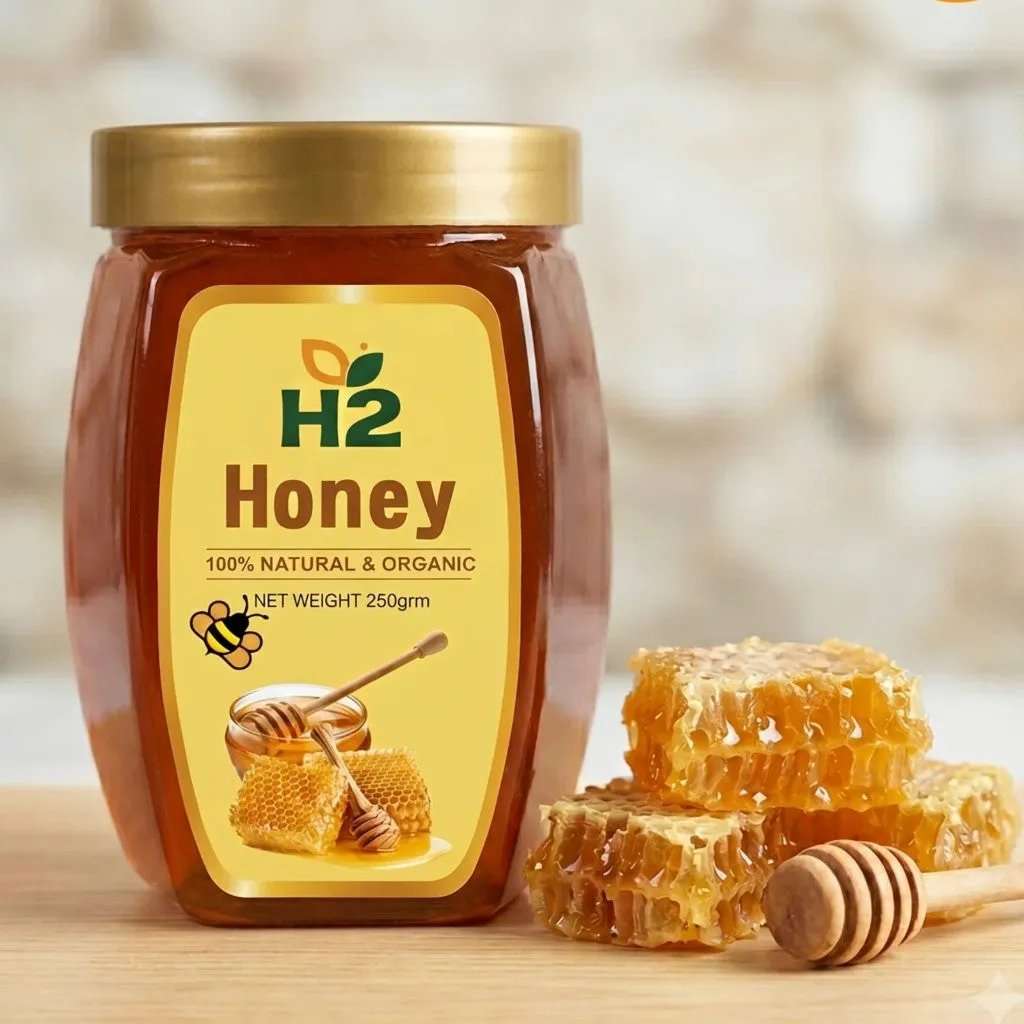
Honey is not a health food version of sugar: both are mostly sugar and both should be used in small amounts. The real differences are practical. Honey is sweeter, so many people use a little less of it, it has its own flavour, and it carries tiny amounts of other plant compounds that white sugar does not. Spoon for spoon, honey has slightly more calories than sugar.
This guide compares the two fairly, explains what "natural sweetener" means on a label, and covers when honey makes sense in an Indian kitchen and when plain sugar is just as good.
Honey vs sugar at a glance
| Honey | White (refined) sugar | |
|---|---|---|
| What it is | Nectar concentrated by bees; mainly fructose and glucose with about 17% water | Sucrose crystals refined from sugarcane or beet |
| Calories per teaspoon | About 21 kcal (7g) | About 16 kcal (4g) |
| Sweetness | Sweeter than sugar, so you may need less | Standard reference sweetness |
| Other nutrients | Trace minerals, enzymes and plant compounds in very small amounts | Essentially none |
| Flavour | Varies with floral source | Neutral |
| Counts as "free sugar"? | Yes | Yes |
Calorie values are approximate reference figures (USDA FoodData Central). A teaspoon of honey weighs more than a teaspoon of sugar because honey is denser, which is why it has more calories per spoon.
Is honey better than sugar?
In a few small ways, yes; in the ways that matter most for health, they are similar.
Honey's advantages are taste and sweetness. Because fructose tastes sweeter than sucrose, a teaspoon of honey can replace a little more than a teaspoon of sugar in chai or milk. Honey also brings a flavour of its own, so a small amount does more work in a breakfast bowl.
Honey does contain small amounts of minerals and plant compounds. In the quantities people eat, a spoon or two a day, these amounts are too small to make honey a meaningful source of nutrients. It is best thought of as a nicer-tasting sugar, not a supplement.
Is honey still sugar?
Yes. Around 80% of honey by weight is sugar. The World Health Organization's guideline on sugars (2015) counts honey as a "free sugar", together with table sugar, jaggery and syrups. It recommends keeping free sugars below 10% of daily energy, and ideally below 5%.
For an adult eating about 2,000 kcal a day, 10% is roughly 50g of free sugar, from all sources. Sweetened drinks, biscuits, mithai and breakfast cereals all count towards that total, so the honey in your tea is only part of the picture.
Natural sweetener vs refined sugar: what the label means
"Natural sweetener" is a loose phrase. Honey, jaggery, dates and coconut sugar are all called natural sweeteners, but each is still a source of sugar. Reading the full label tells you more than the front of the pack.
- Total sugars per 100g: this includes sugar from honey, jaggery, fruit and added sugar.
- Added sugars: many Indian labels now show this line separately. Honey counts as added sugar when a manufacturer adds it to a product.
- Ingredient order: ingredients are listed by weight. If honey, sugar or syrup appears in the first two or three, the product is fairly sweet.
- Several sweeteners: a product can list sugar, honey and glucose syrup separately, so no single one looks large. Add them up.
For more on decoding breakfast packs, see our guide to reading breakfast cereal labels.
Honey vs sugar for diabetes
Honey is not a safe swap for sugar if you have diabetes. It raises blood sugar too, and the effect varies by honey type and portion. If you have diabetes or prediabetes, speak to your doctor or dietitian about whether honey fits your meal plan and in what amount.
When honey makes sense in the kitchen
- Warm drinks: stir honey into tea, milk or lemon water once it has cooled a little. Very hot liquids dull its flavour.
- Breakfast bowls: a teaspoon over oats, muesli, curd or Talbeena adds sweetness and flavour.
- Dressings and marinades: honey blends into liquids easily, unlike granulated sugar.
- Baking: honey adds moisture and browns faster. Use slightly less liquid and a lower oven temperature.
Plain sugar is fine where you want a neutral taste or a crisp texture, such as in many Indian sweets and biscuits.

How to switch from sugar to honey
If you prefer the taste of honey, the aim is to use less sweetener overall, not to add honey on top of sugar.
- Start by replacing each teaspoon of sugar in chai with about three-quarters of a teaspoon of honey.
- Taste before adding more. Many people find they adjust within a couple of weeks.
- Use fruit, dates or cinnamon to sweeten porridge and curd on some days.
- Pick a mild honey for daily use so the flavour does not compete with your tea.
HTWO Multiflora Honey comes in 250g, 500g and 1kg jars, and you can compare other varieties in our honey collection.
Who should not have honey
- Babies under 12 months: never give honey, because of the risk of infant botulism.
- People with a known allergy to honey or bee products.
- People with diabetes or on a specific diet should check with their doctor first.
Frequently asked questions
Is honey healthier than sugar?
Only slightly, if at all. Honey has trace nutrients and a stronger sweetness, but it is still a free sugar with slightly more calories per spoon. Use either in moderation.
Does honey have fewer calories than sugar?
No. Per teaspoon, honey has about 21 kcal and sugar about 16 kcal. Per gram, honey has slightly fewer because it contains water.
Can I use honey instead of sugar in chai?
Yes. Let the chai cool slightly, then stir in a little less honey than the sugar you would normally use.
Is jaggery better than honey?
Both are sources of sugar. Jaggery has a caramel taste and some minerals; honey is sweeter and has a floral taste. Choose by flavour and keep amounts small.



0 comments